FAQs
This page answers common questions about
Insulated Concrete Formwork (ICF), including how ICF blocks work, how they compare to traditional block construction, their energy efficiency, and why builders use ICF systems like Altherm for residential and commercial construction.
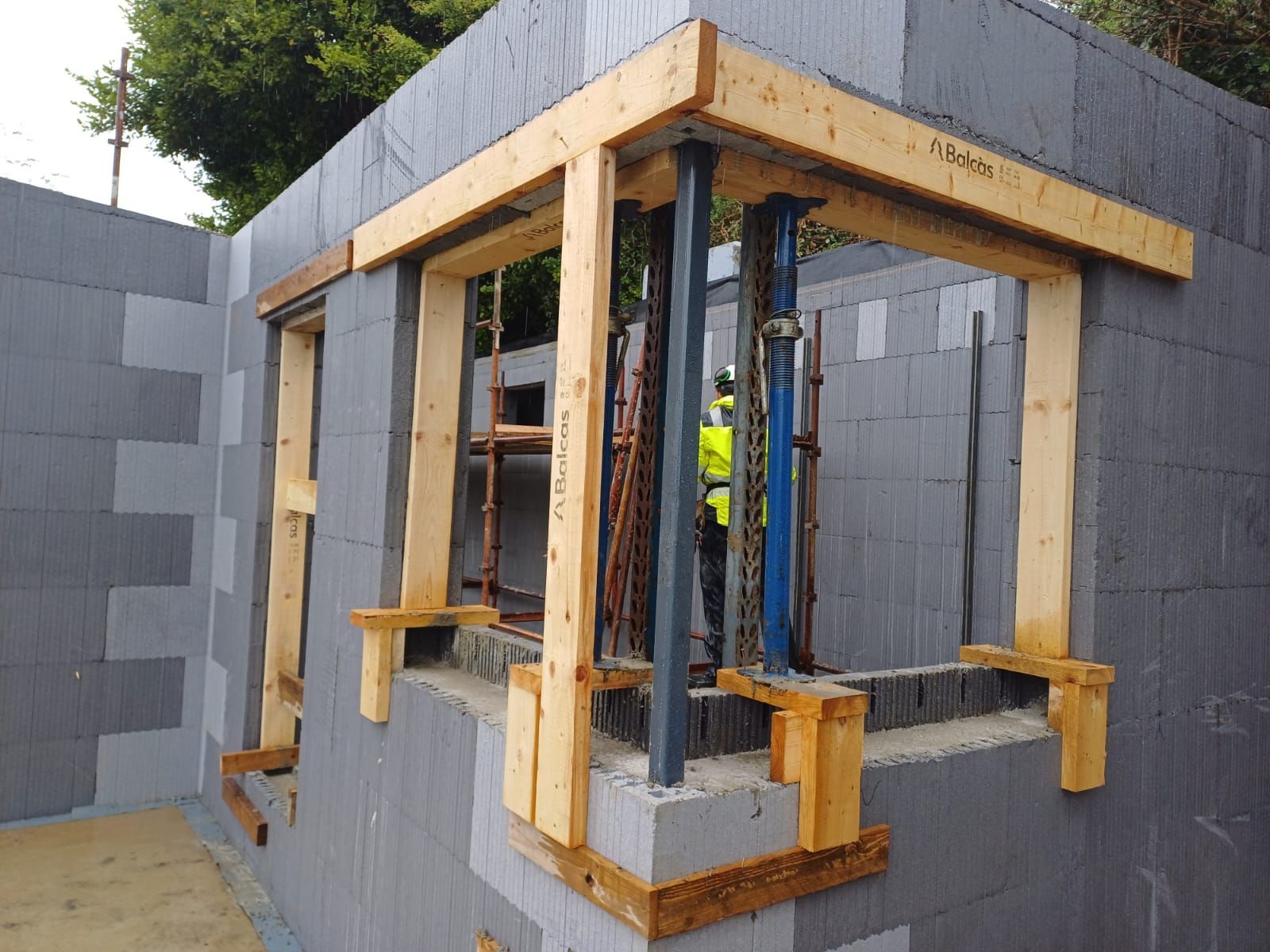
ICF (Insulated Concrete Formwork) blocks are hollow, interlocking units stacked to form walls. Concrete is poured into the cavity, creating a strong reinforced core, while the blocks stay in place to provide permanent insulation and formwork.
Key Benefits:
Airtightness – reduces energy loss
Structural Strength – durable reinforced concrete core
Thermal Insulation – keeps homes warm and energy-efficient
Sound Insulation – reduces external noise
Traditional formwork is temporary and removed after the concrete cures. ICF stays in place, acting as both structure and insulation. This reduces labour, improves energy efficiency, enhances sound insulation, and speeds up construction for example, 16 houses can be completed in just 12 weeks.
MMC (Modern Methods of Construction) includes techniques that improve efficiency and quality.
ICF fits within MMC because its prefabricated blocks reduce waste, speed up builds, and enhance overall building performance.
No. While ICF blocks often use EPS insulation, the structural strength comes from the reinforced concrete core, not the polystyrene.
Altherm ICF blocks also include a fire-retardant additive for added safety.
Builders choose ICF for faster construction, superior thermal performance, improved airtightness, reduced cold bridging, and long-term durability.
ICF also allows quicker design-to-construction timelines, with sites mobilised within weeks and blocks placed soon after ordering.
Yes. ICF is widely recognised as an MMC system in Ireland, the UK and Europe.
As a pre-formed, modular formwork system, it reduces on-site labour, speeds up construction, and improves overall building efficiency.
No. Insulated concrete blocks are individual masonry units, whereas ICF forms a continuous reinforced concrete wall with built-in insulation.
ICF is used for complete housing construction, while insulated blocks are typically for partial or rising walls.
Most houses use EPS ICF blocks, available in straight, corner, and lintel forms, with varying concrete core widths.
Altherm ICF blocks are designed to construct A2-rated houses, providing excellent fire protection and tailored thermal performance to meet customer requirements.
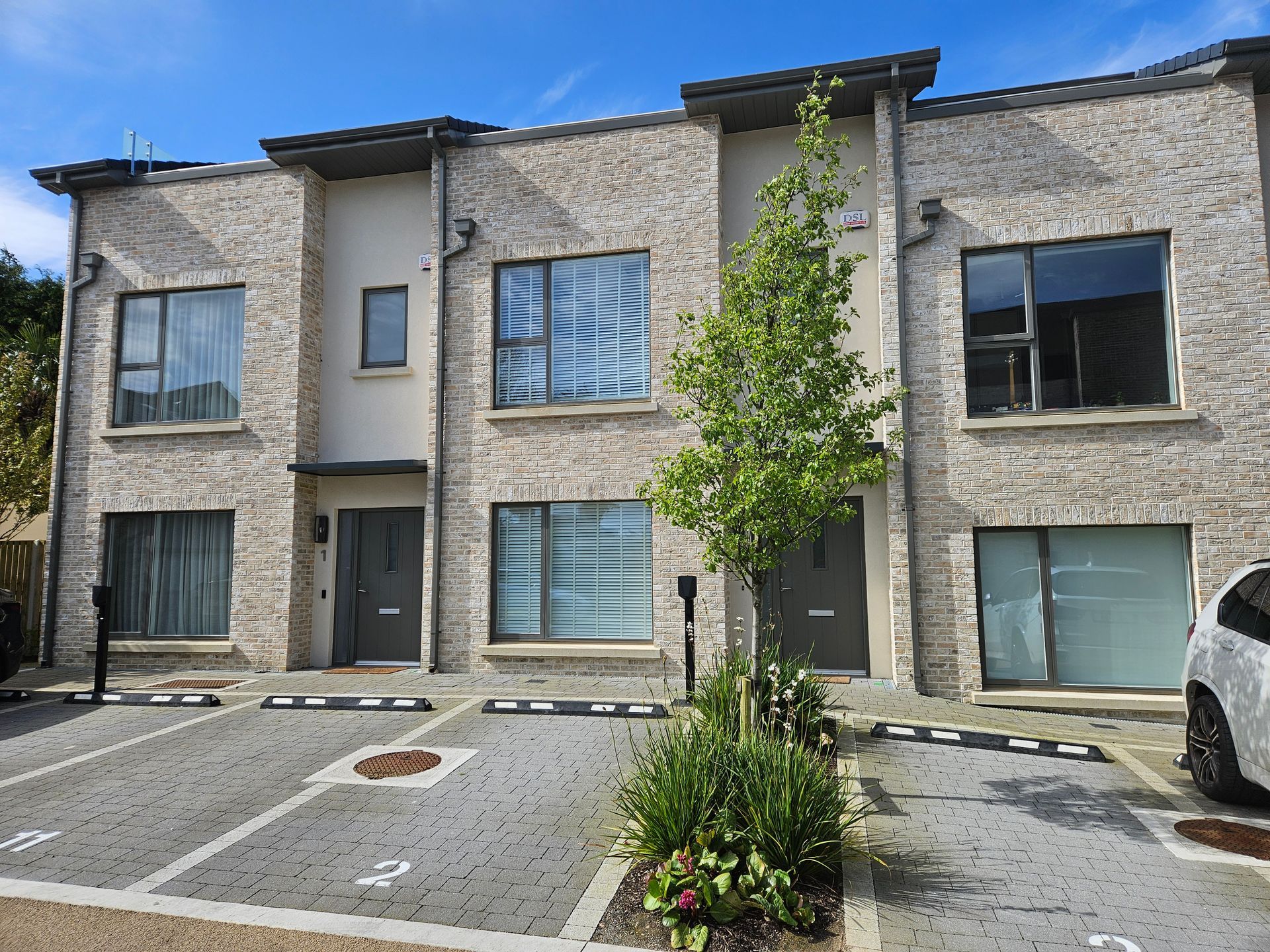
Yes. Brick slips and traditional brick façades can be fixed to ICF walls using approved systems.
ICF also works with stone, renders, and other cladding systems (excluding sand-and-cement finishes).
The choice of brick slip should align with your render provider’s specifications.
Altherm ICF blocks are typically 1200mm long and 400mm high, with concrete cores ranging from 150–200mm, depending on the client's construction requirements.
Altherm ICF walls are significantly stronger due to their reinforced concrete core, typically achieving 25 N/mm² or higher, compared to 7–15 N/mm² for traditional hollow blocks.
ICF forms are typically made from EPS insulation with polypropylene ties.
Both materials are fully recyclable, making ICF an environmentally-friendly building option.
CF forms are single-use and remain permanently as part of the wall, providing homes with high thermal mass, excellent insulation, and long-term durability.
Building with ICF involves laying foundations, stacking blocks, installing reinforcement, pouring concrete, allowing it to cure, and then applying finishes.
ICF typically replaces all traditional blockwork, from foundations to wall plate level.
The walls are filled with reinforced concrete, and a single house can be constructed in approximately 6 weeks.
Yes. ICF is ideal for Irish and UK climates due to its airtight construction and high insulation performance.
Altherm ICF blocks offer a U-value as low as 0.15 W/m²K, with typical ICF walls achieving around 0.18 W/m²K or better, combining insulation with thermal mass for long-lasting energy efficiency and comfort.
Altherm ICF blocks offer a U-value as low as 0.15 W/m²K, with typical ICF walls achieving around 0.18 W/m²K or better, combining insulation with thermal mass for long-lasting energy efficiency and comfort.
The structural shell can often be completed in weeks rather than months.
A typical one-off house can be built within 4–6 weeks, and in larger developments, Altherm ICF installers have completed 16 houses in just 12 weeks.
Yes. ICF is suitable for two-storey and multi-storey buildings.
Altherm ICF has supplied materials for one-off houses, large developments, nursing homes, primary care centres, schools, and apartments.
Most ICF homes use strip or raft foundations designed by an engineer.
Altherm ICF homes are typically built on strip foundations, though concrete and insulated raft foundations have also been successfully used.
Upfront costs may be slightly higher, but ICF homes are often cheaper overall.
Altherm ICF blocks combine insulation, airtightness, and sound performance in a single block, reducing the need for additional materials.
Faster construction also lowers costs for scaffolding, site attendance, and site management, while energy savings reduce long-term lifecycle expenses.
Get in Touch.
If you’d like to talk to us about how Altherm ICF can help you make a positive impact on your building programme,
please contact us:info@altherm.ie